# Sail Shades Car Parking Shades Suppliers in UAE | Professionals Tents & Shades LLC
## Introduction
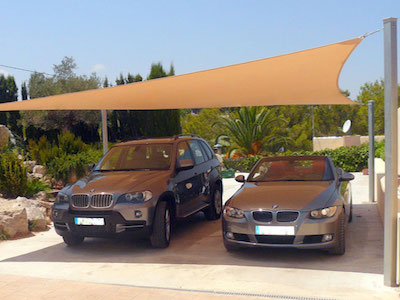
Not every parking area needs a full roof structure. Sometimes a few tensioned fabric sails anchored at three or four points do the job better — less material, a lighter visual footprint, and a shape that can angle exactly where the sun actually hits. Professionals Tents & Shades LLC supplies and installs sail shades for car parking across Dubai, Abu Dhabi, and the rest of the UAE, for villa driveways, garden parking areas, and small commercial lots where flexibility matters as much as coverage.
## About Sail Shades
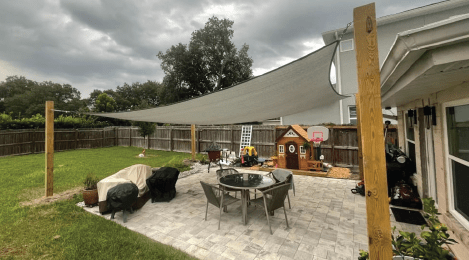
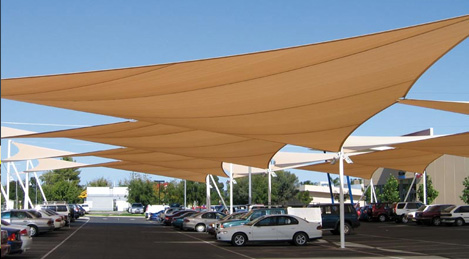
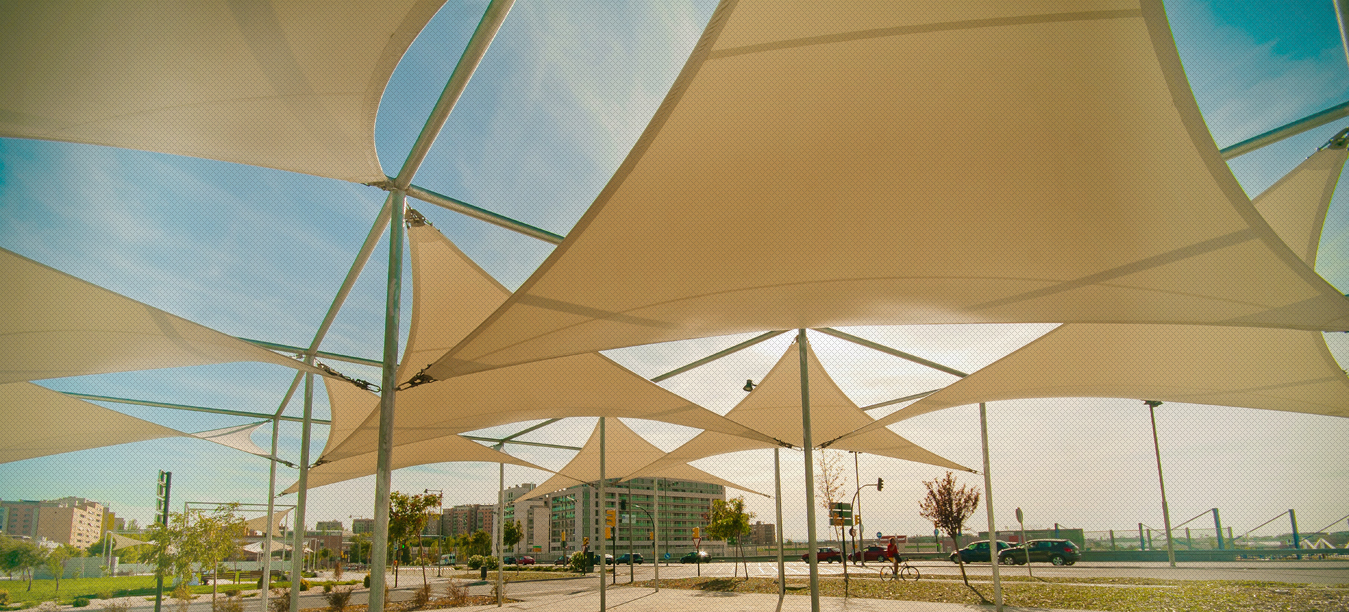
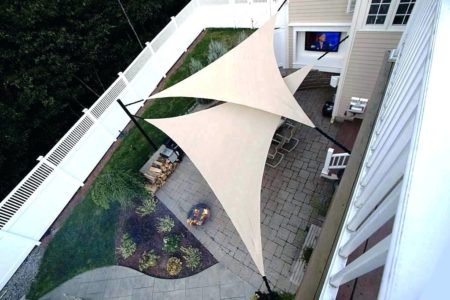
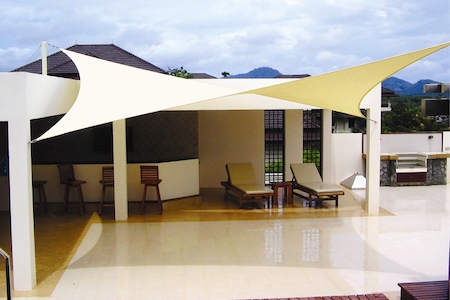
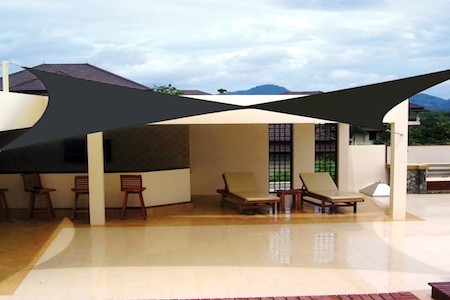
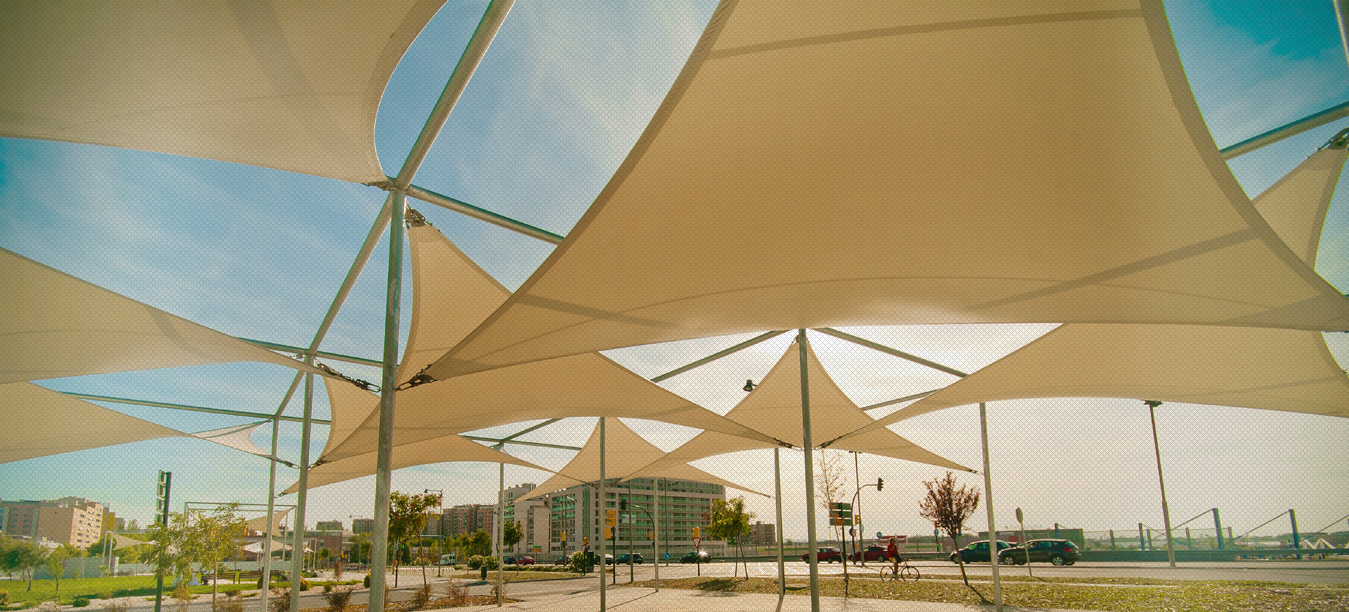
A sail shade is a single piece of tensioned fabric, usually triangular or a four-point quadrilateral, stretched between anchor points at different heights. That height variation is what gives it the sail-like curve and lets rainwater run off toward the lower corners instead of pooling. Unlike a framed canopy with a fixed roofline, sail shades can be angled and layered — overlapping two or three sails at different heights over one parking area creates both better coverage and a more distinctive look than a single flat panel would.
## Types
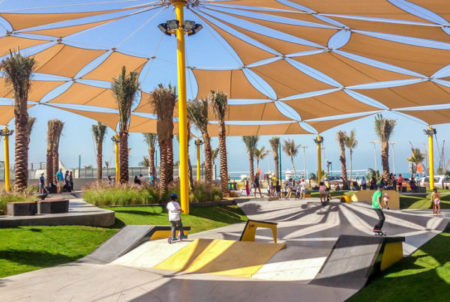
Triangular sails are the most common, anchored at three points and often used in pairs or trios angled against each other for layered shade. Quadrilateral sails use four anchor points and cover a more rectangular footprint, closer to a standard parking bay's shape. Layered multi-sail arrangements combine several sails at varying heights and angles across a larger lot, which both increases coverage and reduces the gaps in shade you'd get from a single flat sail moving with the sun through the day.
## Materials & Fabric Options
Anchor posts and fixing hardware use T6 aluminium or hot-dip galvanized steel, connected with heavy-duty galvanized fittings rated for the tension a properly stretched sail actually carries — more concentrated at the corners than a framed canopy's fabric typically sees. The sail fabric itself is usually PVC (850 GSM) with a PVDF top coat for waterproofing, or HDPE mesh where breathability matters more, since HDPE's knitted structure lets air move through even while blocking most direct sun, which is part of why sail shades read as a cooler option in peak summer than a solid panel.
## Technical Specifications
| Specification |
Detail |
| Post Material | T6 aluminium or hot-dip galvanized steel |
| Connectors | Heavy-duty galvanized fittings |
| Fabric Options | PVC (850 GSM) with PVDF coating, or HDPE mesh |
| UV Protection | Up to 97% UV block |
| Waterproofing | Fully waterproof (PVC); water-resistant (HDPE) |
| Fire Rating | Fire-retardant certified |
| Wind Resistance | Engineered per site load requirements |
| Design Life | 15–20 years with proper maintenance |
| Customization | Sail shape, anchor height, layering, colour |
## Manufacturing Process
Each sail is cut and seamed with a slight curve built into its edges rather than a straight line between corners — that curve, called camber, is what keeps the fabric taut under tension instead of fluttering loose in the middle. Getting the camber wrong is the most common reason a cheaply made sail sags after a season. Anchor hardware is galvanized or powder-coated in-house, sized to the specific tension the sail's shape and span will generate.
## Installation Process
Anchor points get surveyed first — posts, walls, or existing structures the sail will connect to — since sail shades often tie into a building or boundary wall rather than standing entirely independent like a framed canopy. Footings for any new posts are cast to the actual pull each anchor point will bear, which varies by corner depending on the sail's shape and angle. The fabric goes up last and gets tensioned evenly across all anchor points at once, since pulling one corner fully tight before the others distorts the camber. A final check on tension and hardware happens before handover.
## Benefits & Applications
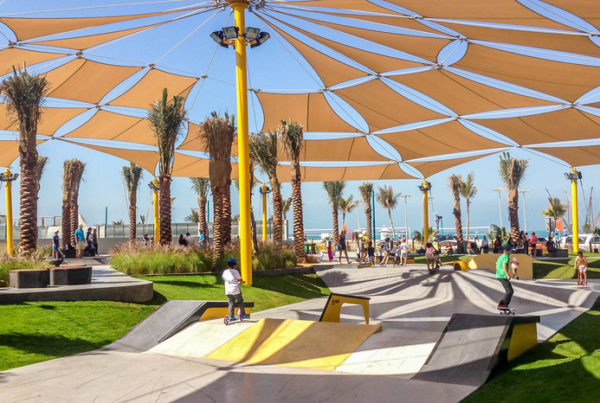
Sail shades cover an area with less material and a lighter structural footprint than a full framed canopy, and the layered, angled arrangement gives genuine architectural interest that a flat roof doesn't. They're also more adaptable after installation — angle and position can be reconsidered more easily than reconfiguring a fixed-frame structure. Villa driveways, garden and courtyard parking, boutique retail frontages, and recreational or resort parking areas where the aesthetic matters as much as the shade are where sail designs get used most.
## Why Choose Professionals Tents & Shades LLC
Sail shades are less forgiving than they look — get the camber or tension sequencing wrong and it shows immediately as a sagging or fluttering panel. We cut and tension every sail specifically for its shape and anchor configuration rather than treating it as a generic fabric panel, and our own crew installs, so the same understanding of that specific sail's geometry carries through from workshop to final tensioning on-site.
## Dubai Coverage
Dubai's villa communities and boutique commercial developments are where sail shades come up most often, typically for driveways and garden parking areas where a full canopy would feel heavier than the space calls for.
## Abu Dhabi Coverage
In Abu Dhabi, sail shades get specified across residential compounds and resort-style developments, and coastal exposure factors into whether we lean toward hot-dip galvanized steel anchor posts for sites nearer the water.
We also supply and install sail shades across Sharjah, Ajman, Umm Al Quwain, Fujairah, Ras Al Khaimah, and Al Ain, applying the same tensioning standard regardless of location.
## Frequently Asked Questions
A handful of things come up on almost every sail shade enquiry.
**What's the real difference between a sail shade and a standard framed canopy?**
Answer : No rigid roof frame. It's tensioned fabric pulled between anchor points at different heights, which gives it that curved, angled look instead of a flat roofline.
**Can sail shades be layered to cover a whole parking area?**
Answer : Yes, that's actually common. Two or three sails at different heights and angles cover more consistently through the day than one flat panel would.
**Do sail shades work for a standard single-car driveway?**
Answer : They do, though a triangular or quad sail sized for one bay is a smaller structure than the layered arrangements used on bigger lots.
**PVC or HDPE for a sail shade?**
Answer : PVC if waterproofing matters most. HDPE if you want more airflow and don't mind some rain getting through — a lot of clients go HDPE specifically for the breathability.
**What's camber, and why does it matter?**
Answer : It's the slight curve built into a sail's edges. Without it, the fabric goes slack in the middle instead of staying taut. It's the difference between a sail that looks sharp for years and one that sags after a few months.
**Can a sail attach to an existing wall or building rather than a new post?**
Answer : Often, yes. We'd assess the wall's structural capacity to take that load before confirming.
**How long does a sail shade actually last?**
Answer : Fifteen to twenty years for the posts and hardware. Fabric wears faster and gets replaced on its own cycle.
**Is the fabric fire-retardant and UV-stabilised?**
Answer : Yes, both options, as standard.
**What frame material do you recommend for coastal properties?**
Answer : Hot-dip galvanized steel, usually — salt air is tough on standard aluminium finishes over time.
**Can the sail shape or colour be customized?**
Answer : Yes, shape, size, anchor height, and colour are all set per project.
**Do you handle the tensioning calculations in-house?**
Answer : We do. Getting anchor loads and camber right is a big part of what actually makes a sail shade hold up.
**How long does installation take?**
Answer : A single sail is usually quick. Layered multi-sail arrangements take longer, mostly because of the sequential tensioning. We'll confirm after seeing the site.
**Do you install outside Dubai and Abu Dhabi?**
Answer : Yes — Sharjah, Ajman, Umm Al Quwain, Fujairah, Ras Al Khaimah, and Al Ain are all regular parts of our service area.
**What maintenance does a sail shade need?**
Answer : Periodic tension checks and an inspection of anchor points after strong wind. Fairly low maintenance overall.
**How do we get started on a quote?**
Answer : Send your location, roughly what area you want covered, and photos of the site if you have them. We'll set up a survey from there.
## Get a Quote for Your Sail Shade
If you want parking shade with a lighter footprint and more design flexibility than a full canopy, sail shades are worth a serious look. Contact Professionals Tents & Shades LLC for a site survey and a straightforward, written quotation before committing to a supplier.





 United Arab Emirates
 Saudi Arabia
 Qatar
 Oman
 Kuwait
 Bahrain